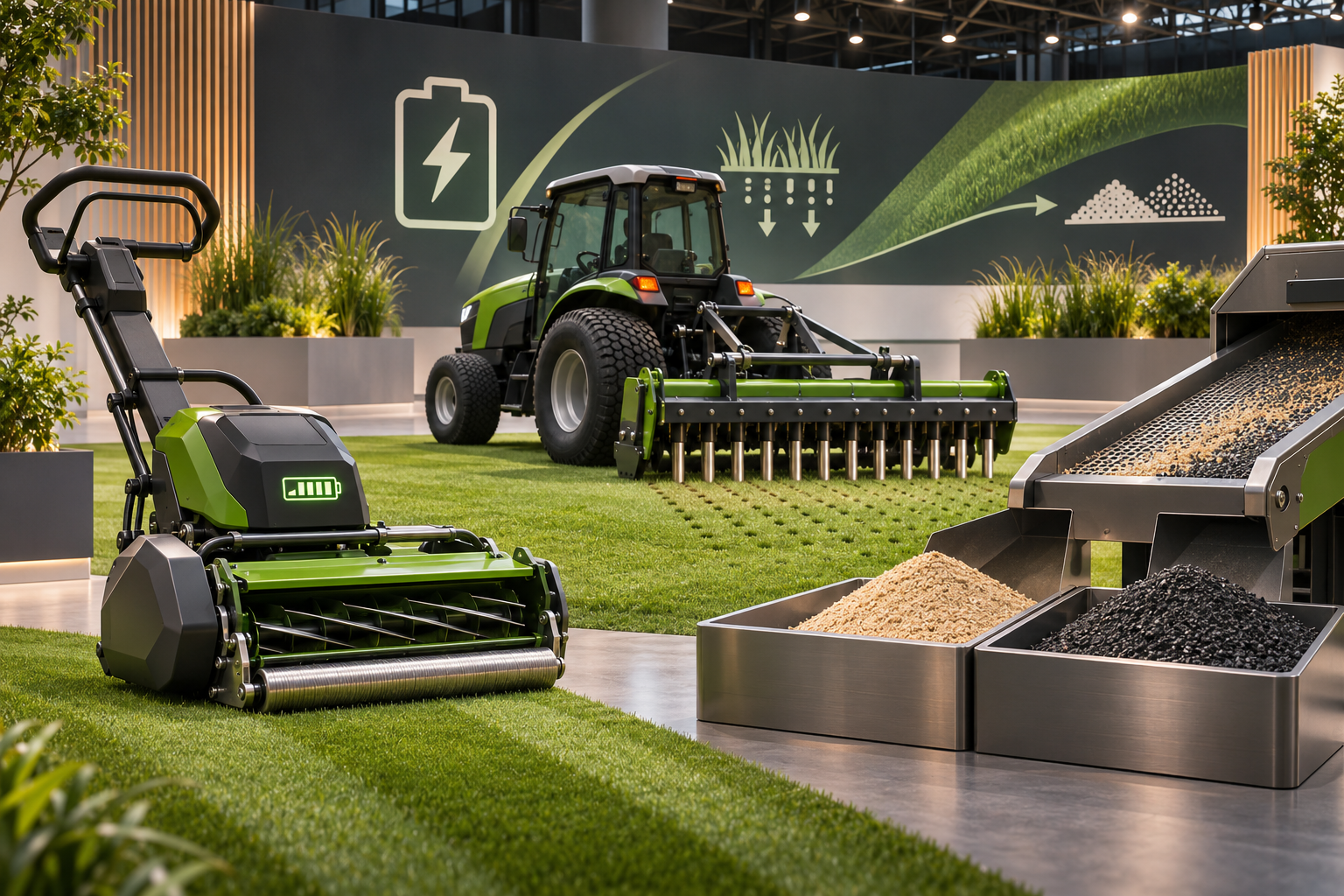
SALTEX returned to Birmingham on 11 and 12 November with a machinery programme that made three priorities difficult to miss: electric power, more targeted surface intervention and better recovery of material that would otherwise be waste.
Trade-show launches should be treated as signals, not verdicts. Display machines have not necessarily proved themselves in every climate, workload or maintenance environment. But the concentration of development effort shows which operational problems manufacturers believe customers are ready to solve.
Electric equipment is moving into core tasks
The official SALTEX preview included DeNaiYou’s E362B electric triplex mower, EDY750 electric sprayer and EDL80A electric walk-behind mower. ISEKI UK also used the event to present electric technology, including the AllTrec 7510F tool carrier, second-generation Raymo R42 and R52 machines and the latest SXGE216.
The notable change is breadth. Battery power is no longer confined to handheld tools or a single specialist machine. Manufacturers are applying it to mowing, spraying and multi-purpose equipment that sits closer to the centre of a daily turf operation.
For buyers, the assessment needs to extend beyond headline runtime. Charging windows, available electrical capacity, battery replacement cost, transport between sites, wet-weather performance, technician capability and backup plans all affect whether an electric machine fits the operation. Noise reduction and the absence of local exhaust emissions may be valuable, but the machine still has to complete the required work inside the available window.
Aeration remains a development priority
GKB highlighted its Deep Tine Aerator HS, reinforcing continued manufacturer attention on compaction, rooting depth and water movement. Aeration products rarely receive the novelty attached to autonomous or electric machines, yet they address some of the most persistent constraints in turf performance.
The operational question is not simply how deep a machine can work. Teams need to consider soil condition, tine selection, heave, surface disruption, tractor requirements and the time available for recovery. A more capable implement only creates value when it is matched to a defined agronomic objective and used at the right moisture level.
Resource recovery becomes machinery
The show preview also featured a sand-and-rubber separation plant from GKB. Equipment of this kind reflects growing attention to what happens after material is removed from a surface. Separating useful components can reduce disposal volume and may create opportunities for reuse, depending on material condition and local rules.
Origin Amenity Solutions used SALTEX to present products including Nutri-Max, adding another reminder that equipment choices increasingly sit inside a wider conversation about input efficiency, soil function and measurable outcomes.
The buying discipline
The common thread is resource control: energy, labour, soil condition and material. Before committing capital, turf managers should define the problem, measure the current cost, test the machine in representative conditions and agree how success will be recorded. Demonstrations should include the least convenient part of the workflow—charging, cleaning, transport, setup and recovery—not only the productive pass.
SALTEX 2026 did not settle which products will dominate the next fleet cycle. It did show that manufacturers expect the next cycle to be judged on more than cutting quality or engine power. Operational fit, energy strategy and whole-of-life resource use are moving closer to the centre of the decision.
Sources: SALTEX product-launch preview; SALTEX 2026 event information.