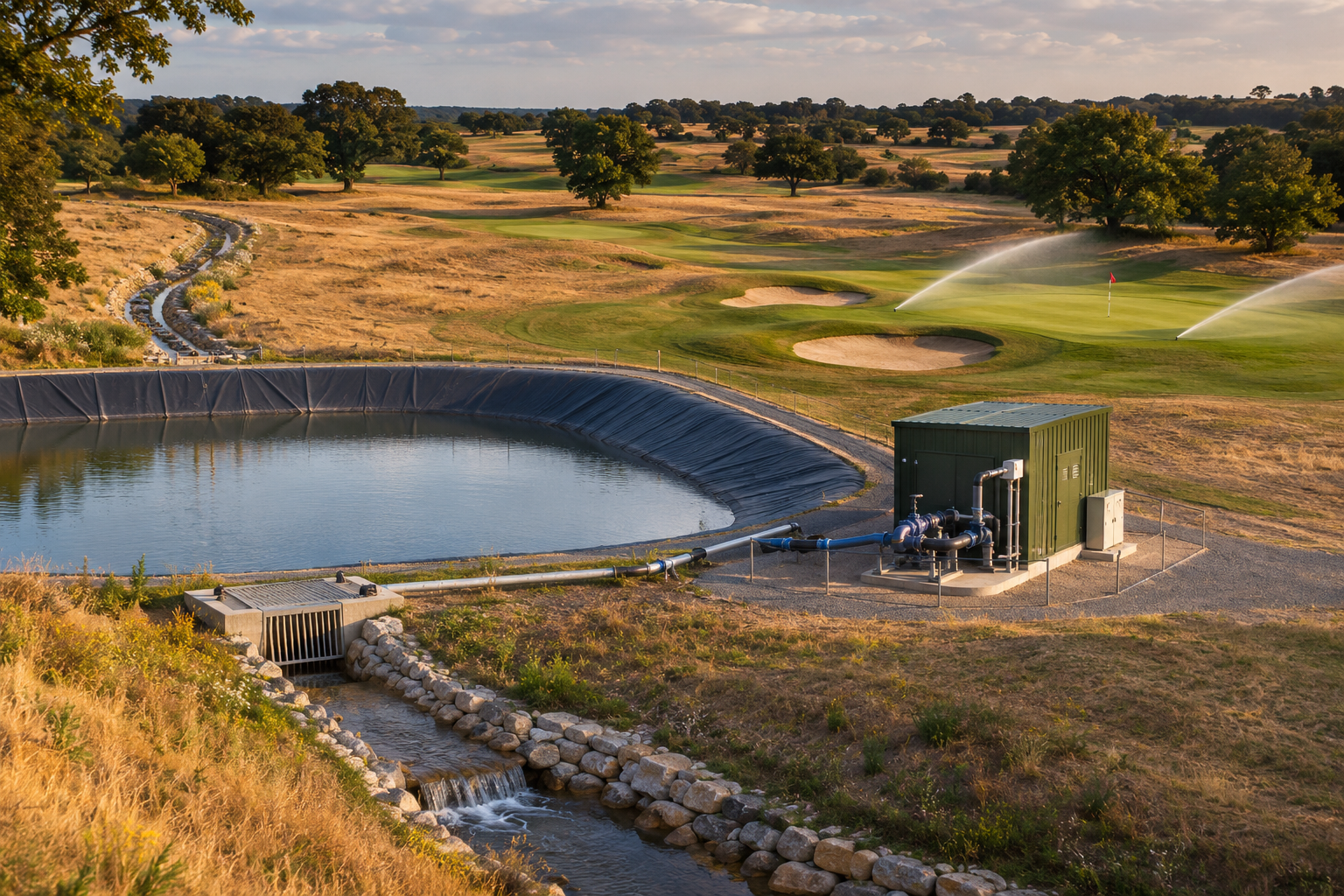
Golf clubs across England and Wales are being asked to contribute to a national study of water use and resilience. The project will build a clearer picture of where courses obtain water, how it is stored and applied, and which facilities may be exposed as supply pressure increases.
The study is supported by industry bodies including BIGGA and the Golf Club Managers’ Association and is intended to inform future work on abstraction, storage and alternative supplies. Its value will depend on the quality of the operational data clubs provide.
Why the baseline matters
Government’s 2025 National Framework for Water Resources estimated that England has around 2,200 golf courses and that approximately 60 per cent use potable mains water, with the balance drawing on direct abstraction. Those are broad estimates. Course-by-course information about volumes, sources, storage and seasonal demand is far less complete.
Without a reliable baseline, the sector struggles to demonstrate where it has already reduced consumption, where investment is most urgent and which regulatory changes would have the greatest effect. It also becomes harder for an individual club to compare its own exposure with facilities facing similar soils, climate and playing demand.
The national work is expected to draw on club responses alongside Environment Agency, MOSL and other data. Previous analysis has identified potential links between golf courses and nearby wastewater infrastructure, suggesting that treated effluent could be relevant for some sites. Proximity alone does not make a supply viable, but it can help identify where detailed feasibility work should begin.
What clubs should prepare
A useful submission requires more than an annual utility bill. Clubs should assemble meter readings, abstraction records, irrigation volumes, storage capacity, irrigated area and notes on seasonal restrictions. They should distinguish potable supply from borehole, river, harvested rainwater and any other source. Where data is incomplete, that gap should be stated rather than filled with an assumption.
It is also worth documenting the measures already in place: moisture monitoring, irrigation audits, nozzle or head upgrades, leak detection, wetting-agent programmes, altered target areas and changes to turf species or soil management. These details connect consumption figures with the decisions that produced them.
From census to resilience plan
The exercise should prompt clubs to run their own supply-risk review. What is the maximum stored volume? How many dry days can it support at peak demand? Which surfaces receive priority if supply is constrained? Does the abstraction licence align with the course’s current need? What permissions, treatment and infrastructure would be required for an alternative source?
Water resilience is not solely an irrigation-system issue. It affects course standards, capital planning, member expectations, ecology and the ability to operate through drought. Clear policies on priority surfaces and acceptable summer presentation can be as important as a new pump or reservoir.
A national evidence base will not remove local constraints. It can, however, give the golf sector a stronger basis for investment and policy discussions. Clubs that contribute accurate data are not simply completing a survey; they are helping define how future water decisions account for the realities of managing living sports surfaces.
Sources: BIGGA; GCMA; UK Government National Framework for Water Resources.